

Project type:
Internal Brand Enablement System
Context:
Executive decision-making in complex,
high-stakes environments
high-stakes environments
Scope:
Presentation systems, executive storytelling frameworks, data abstraction, and governance
My role:
Art Director, Presentation Systems & Brand Enablement
Tools:
PowerPoint, Illustrator, Photoshop.
Overview
This project represents an internal presentation system designed to support consistent, high-quality communication across enterprise teams.
Rather than focusing on individual decks, the work centred on building governed templates that could scale across audiences, authors, and use cases, without eroding brand clarity or credibility over time.
The Challenge
As organizations grow, presentation quality often becomes inconsistent. Teams work quickly, templates drift, and brand standards become difficult to apply under real-world constraints.
The challenge wasn’t design capability; it was governance.
This system needed to:
• Support frequent, high-stakes presentations
• Be usable by designers and non-designers
• Scale across long-form decks and multiple audiences
• Maintain structure without slowing teams down
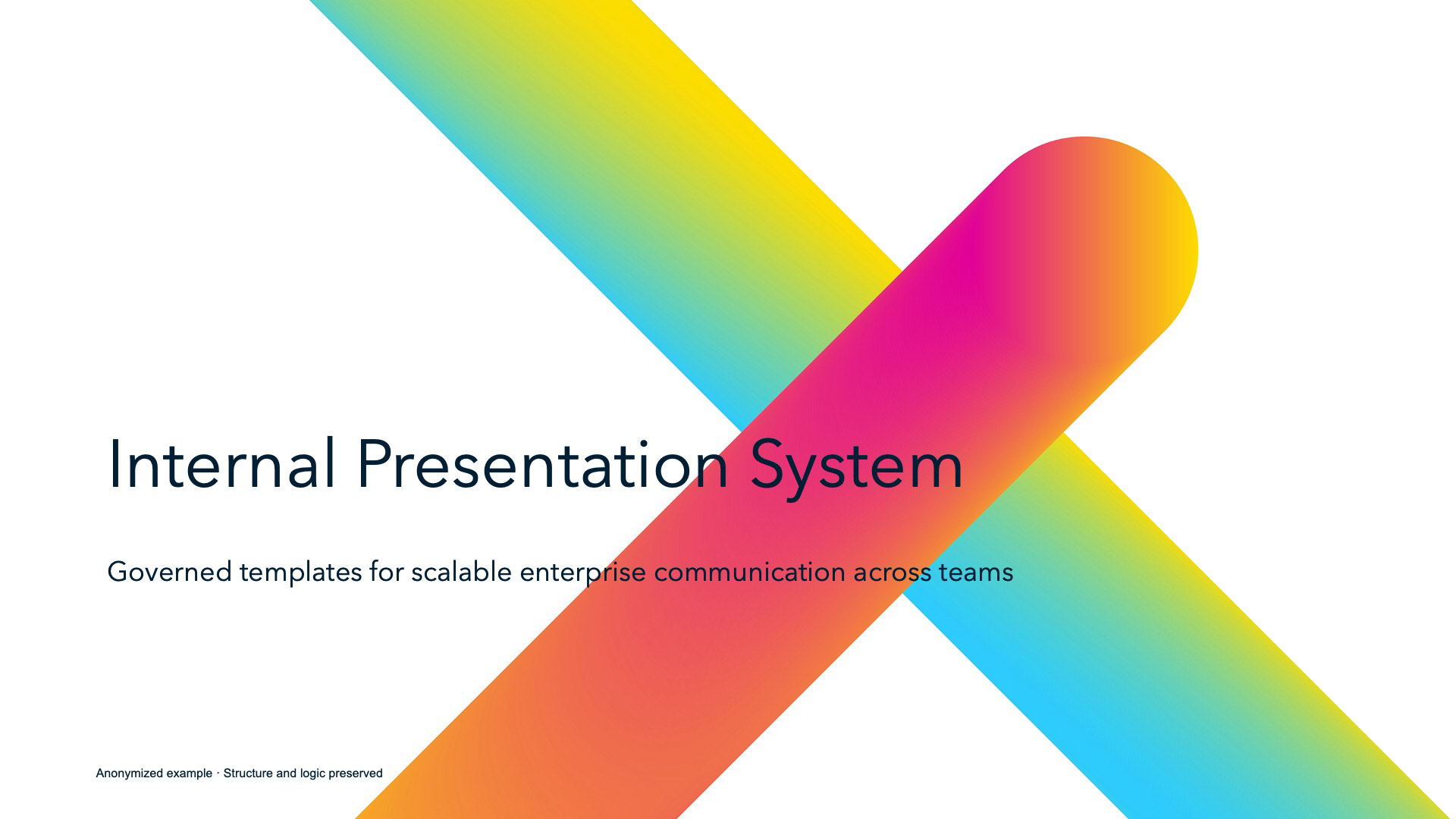
A flexible framework supporting executive updates, strategy readouts, and cross-functional alignment.
My Role
I led the design and systemization of an internal presentation framework focused on enablement rather than aesthetics.
My responsibilities included:
• Defining slide roles, hierarchy, and narrative structure
• Designing reusable layouts for text, data, and executive communication
• Establishing built-in governance to prevent misuse and visual drift
• Balancing flexibility with guardrails to support real-world usage
This work sat at the intersection of brand, operations, and internal enablement.
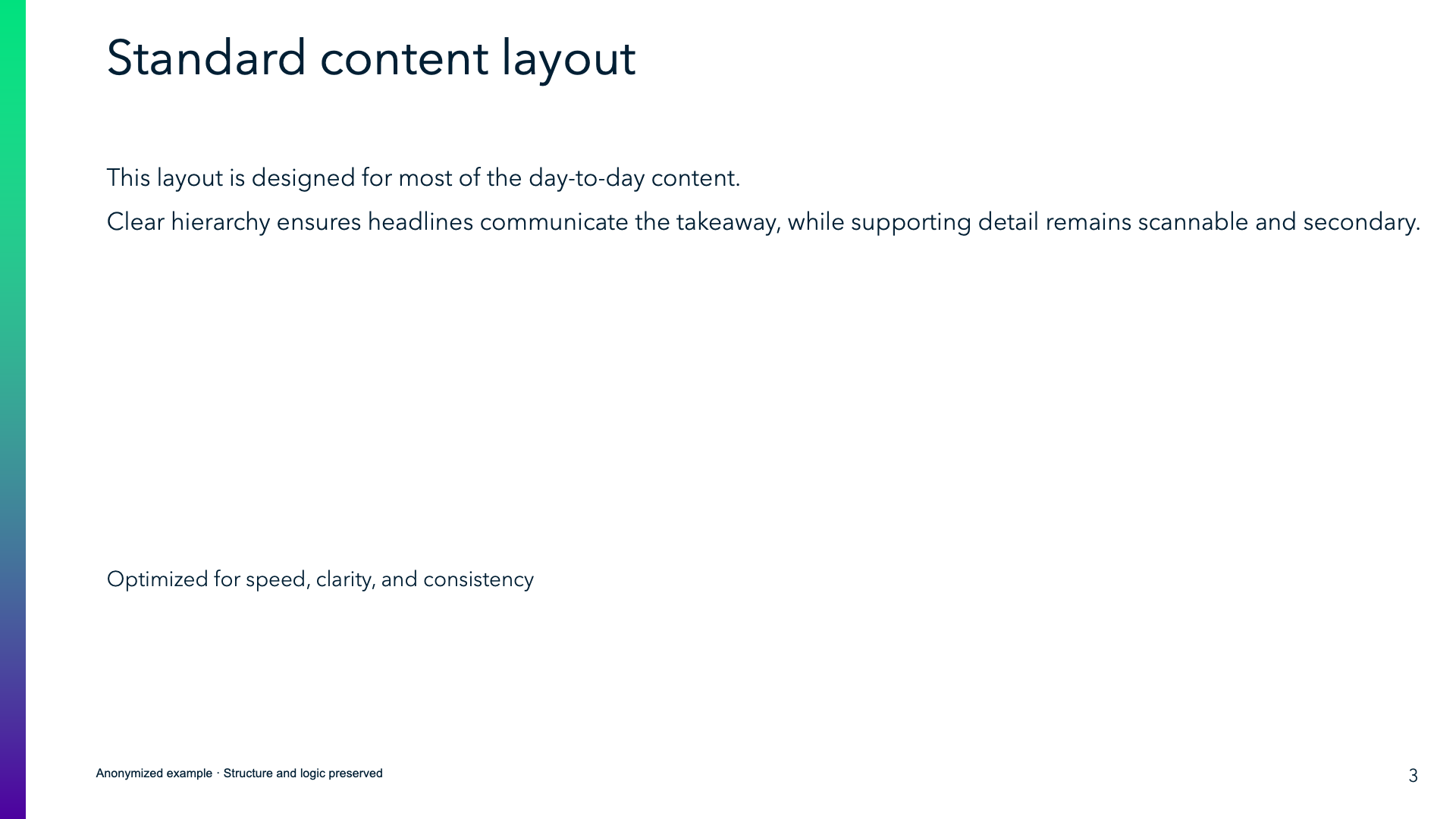
Core layouts optimized for clarity, hierarchy, and everyday usability.
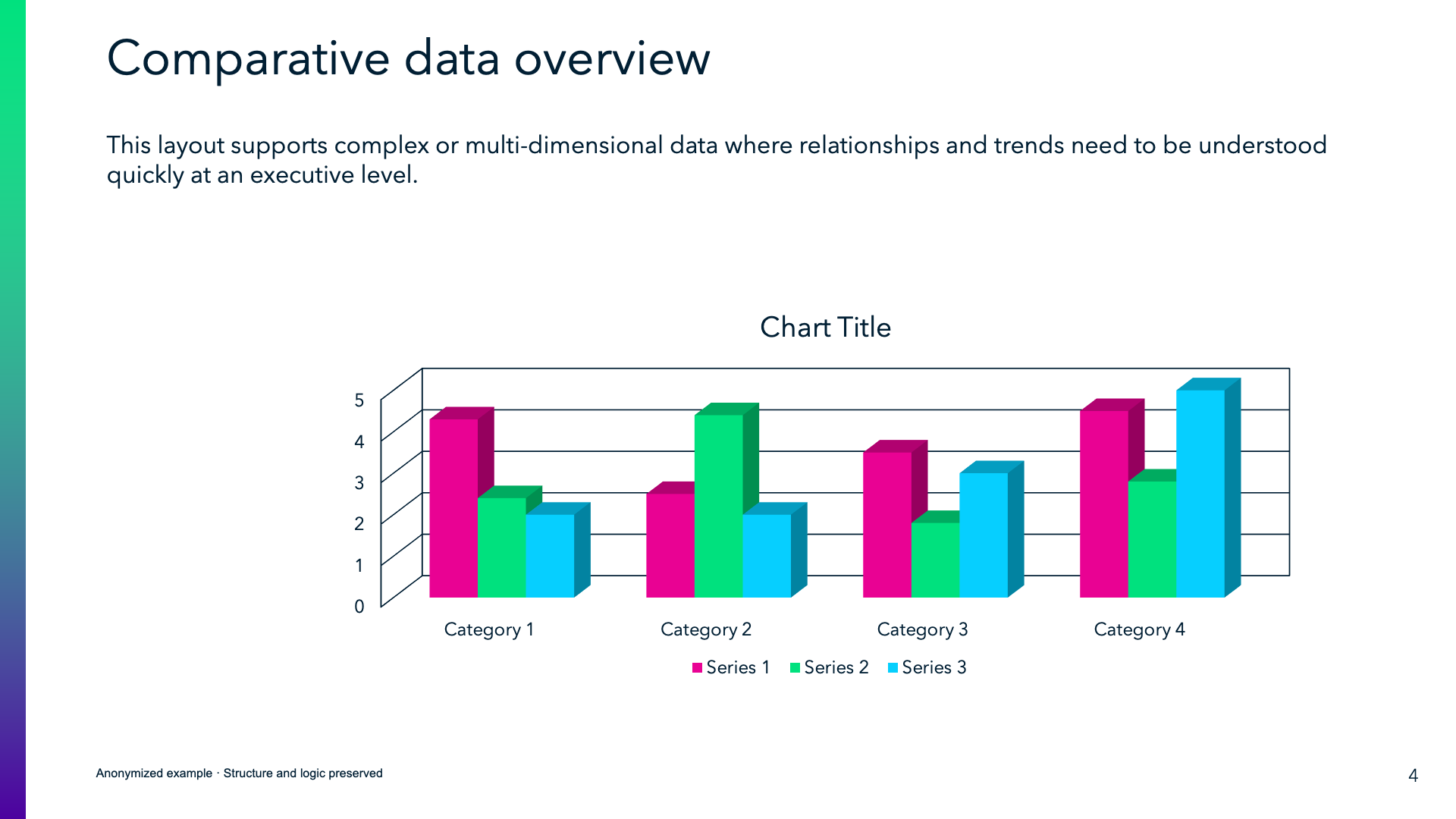
Structured approaches to complex data support executive-level understanding and discussion.
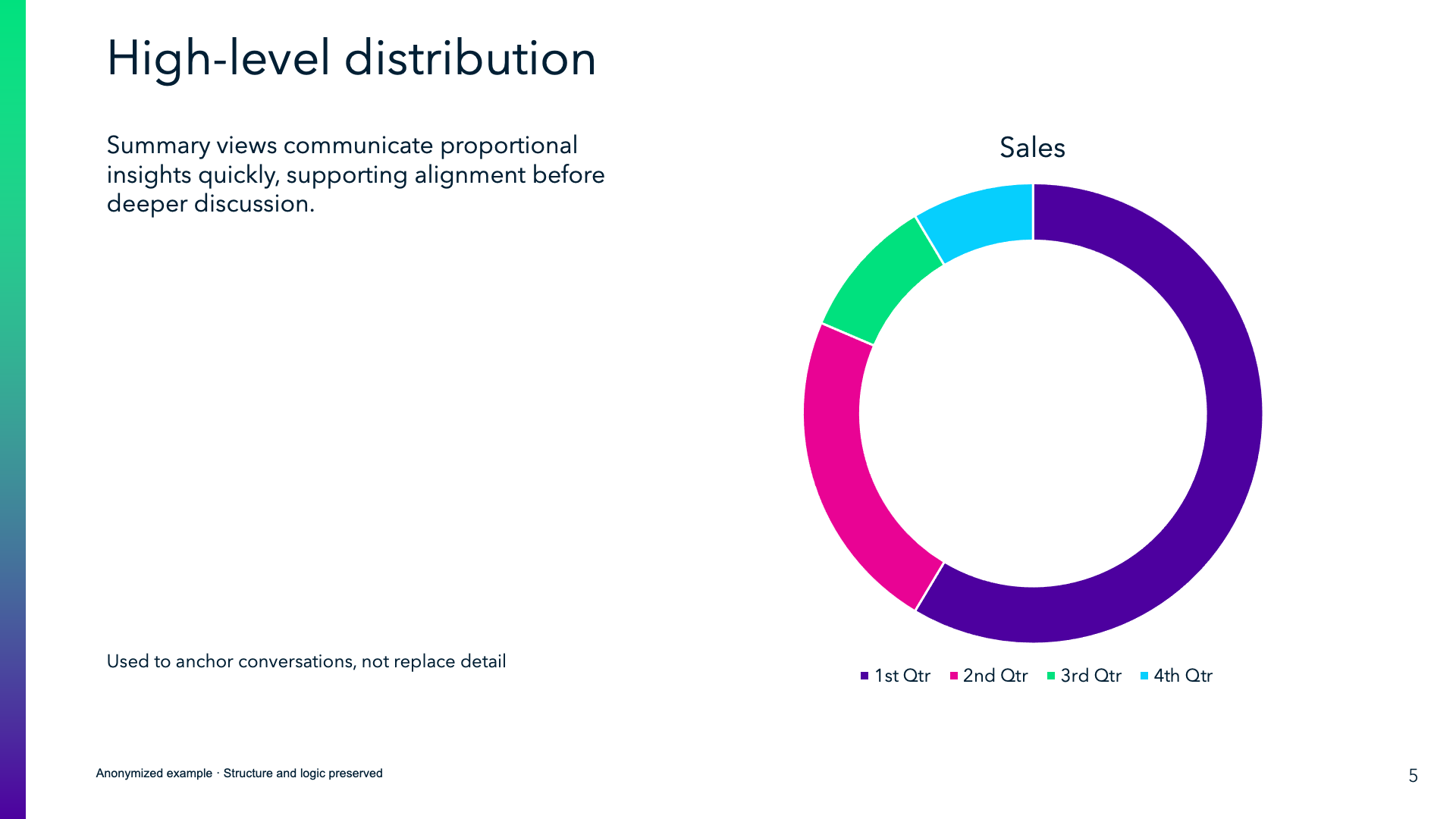
Summary views anchor conversations before deeper analysis.
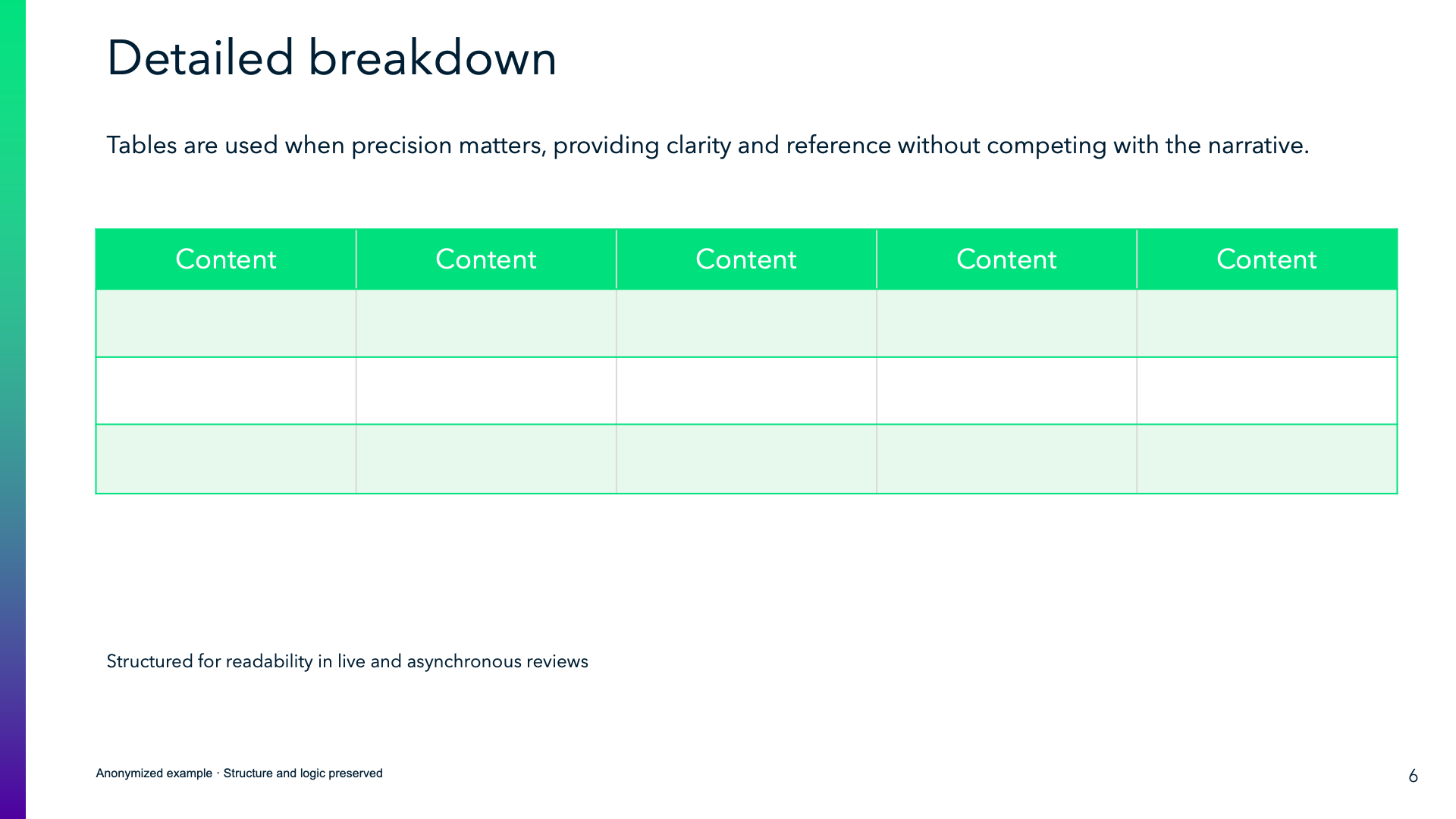
Tables provide precision and reference without competing with the narrative.
The System
The solution was a modular presentation system designed to behave predictably at scale.
Key components included:
• Clear hierarchy for headlines, content, and supporting detail
• Repeatable layouts for day-to-day content and executive use
• Structured approaches to charts, tables, and summaries
• Embedded guidance that reduced reliance on documentation
Templates were treated as products, designed for longevity, adoption, and clarity under pressure.
Governance by Design
Instead of enforcing rules externally, governance was embedded directly into the templates.
This included:
• Locked layout and spacing to preserve hierarchy
• Editable content zones for flexibility
• Defined intended use for executive-facing materials
• Clear boundaries for extending or adapting the system
The result was consistency without friction.
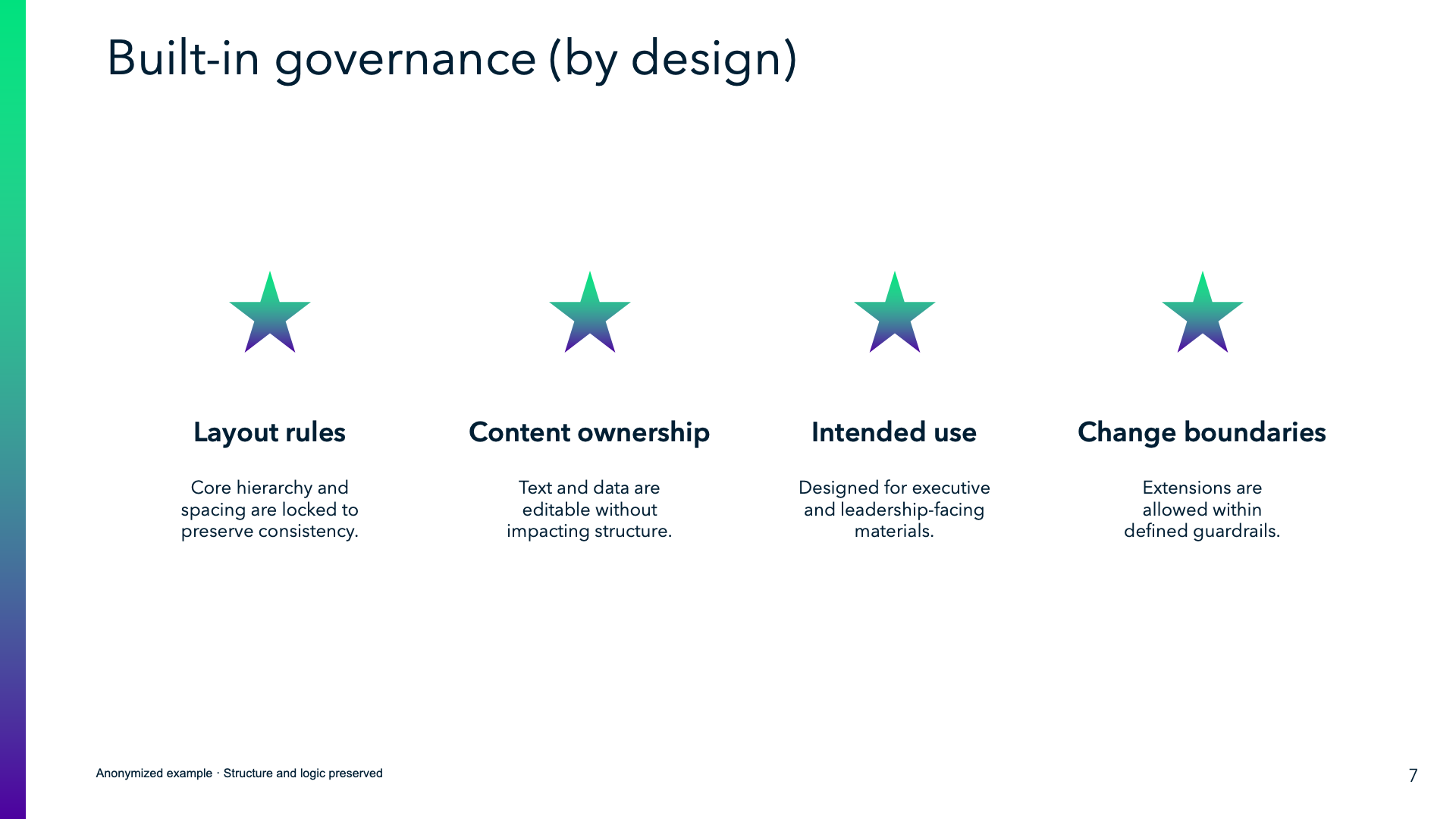
Embedded rules and guardrails maintain consistency without external enforcement.
Outcome
The system enabled teams to move faster while maintaining a shared visual and narrative language.
By reducing rework, minimizing interpretation, and preventing drift, the templates supported clearer communication, especially in leadership and cross-functional contexts.
Why This Matters
This project demonstrates my approach to brand enablement:
• Treating templates as infrastructure, not files
• Designing governance as a creative system
• Supporting scale without sacrificing clarity
• Building tools that protect brand integrity over time
Client details have been anonymized. Structure and logic are preserved.
The system supports long-form use, multiple audiences, and repeat application over time.
A shared presentation language that enables speed while protecting brand clarity.
Brand consistency scales when governance is designed, not enforced.