

Project type:
C-Suite Executive Communication System
Context:
Designing structured executive storytelling frameworks for enterprise technology organizations navigating scale, transformation, and strategic alignment.
Scope:
End-to-end narrative system design, including presentation architecture, visualization frameworks, content hierarchy, and long-form documentation templates.
My role:
Art Director / Senior Designer
Owned narrative design, visual systems, and executive-level communication strategy.
Owned narrative design, visual systems, and executive-level communication strategy.
Tools:
PowerPoint, Illustrator, Photoshop
Overview
This work focuses on building narrative architecture for executive and leadership environments within large-scale enterprise organizations.
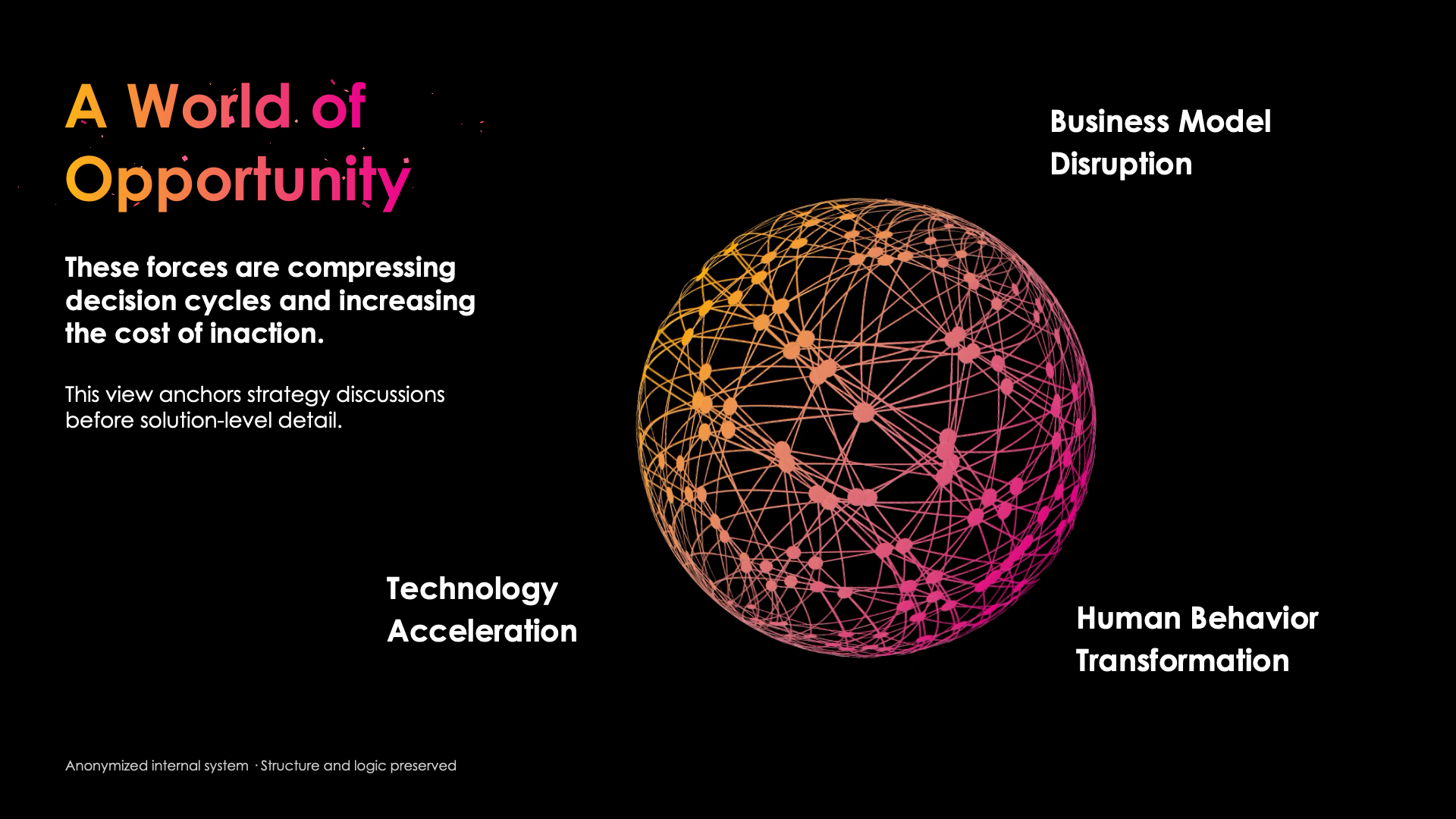
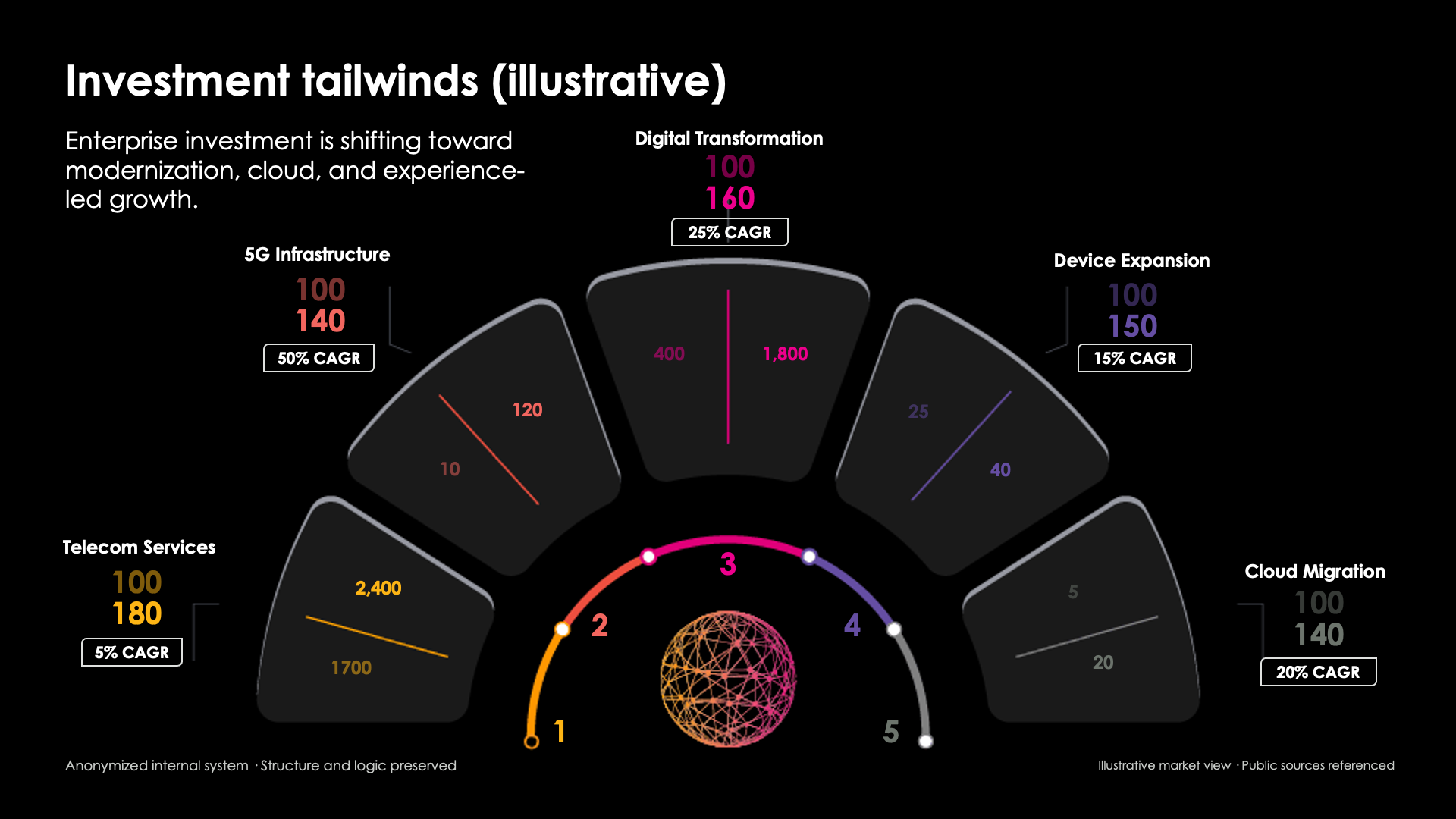
Rather than designing individual presentations, the emphasis was on structuring how complex information is framed, sequenced, and delivered. Market dynamics, platform capabilities, investment priorities, and long-term strategy were translated into cohesive story systems built for decision-making.
The objective was not decoration. It was alignment.
The Challenge
Enterprise leadership operates within environments defined by:
• Multi-layered strategic initiatives
• Rapid transformation cycles
• Technical outputs for non-technical audiences
• High-stakes decisions with compressed timelines
• Multi-layered strategic initiatives
• Rapid transformation cycles
• Technical outputs for non-technical audiences
• High-stakes decisions with compressed timelines
The challenge was not to simplify the business.
It was to clarify the signal within the noise.
It was to clarify the signal within the noise.

My Role
I led the narrative architecture across executive communications, ensuring that:
• Complex strategy was structured into decision-ready sequences
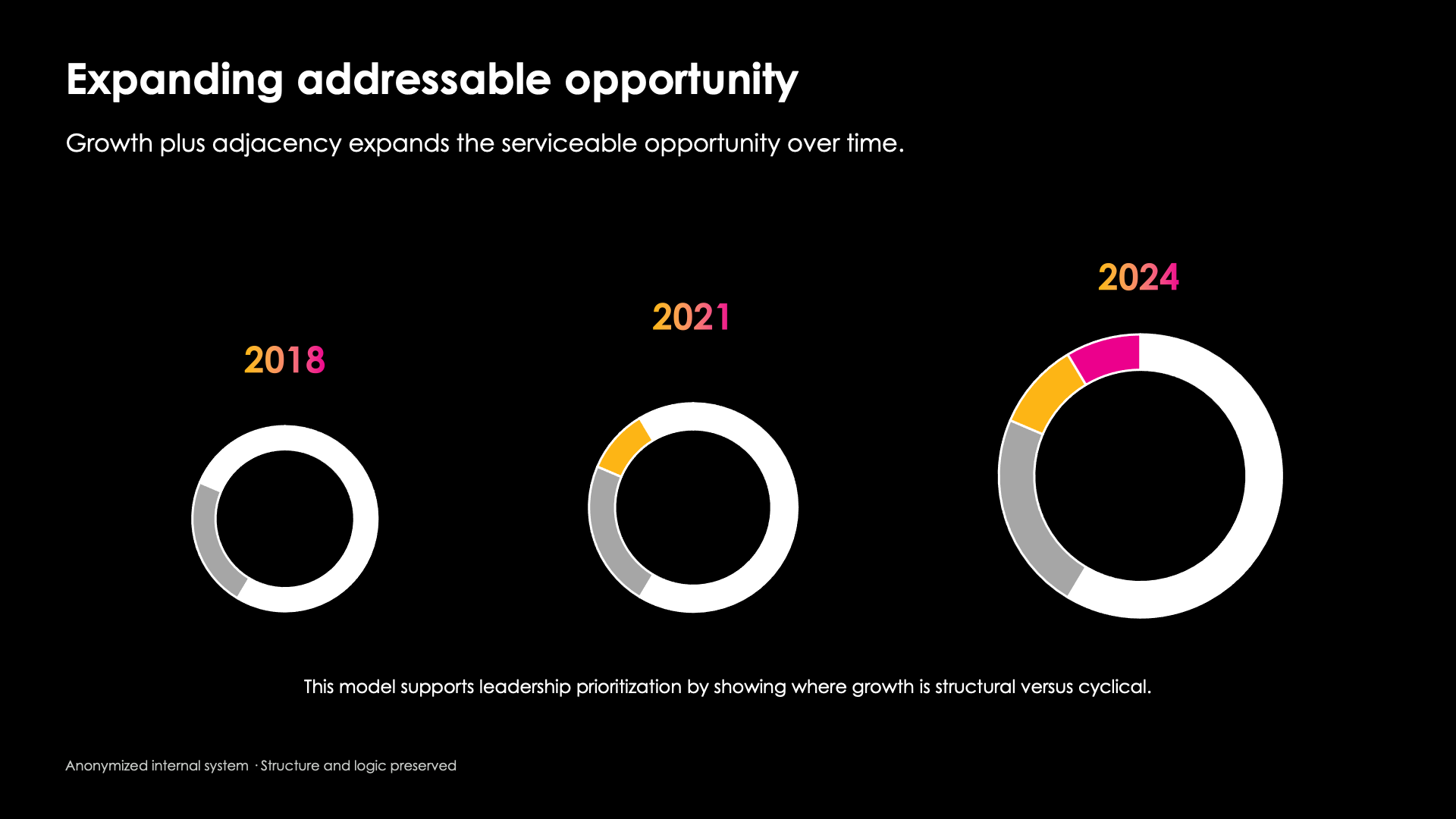
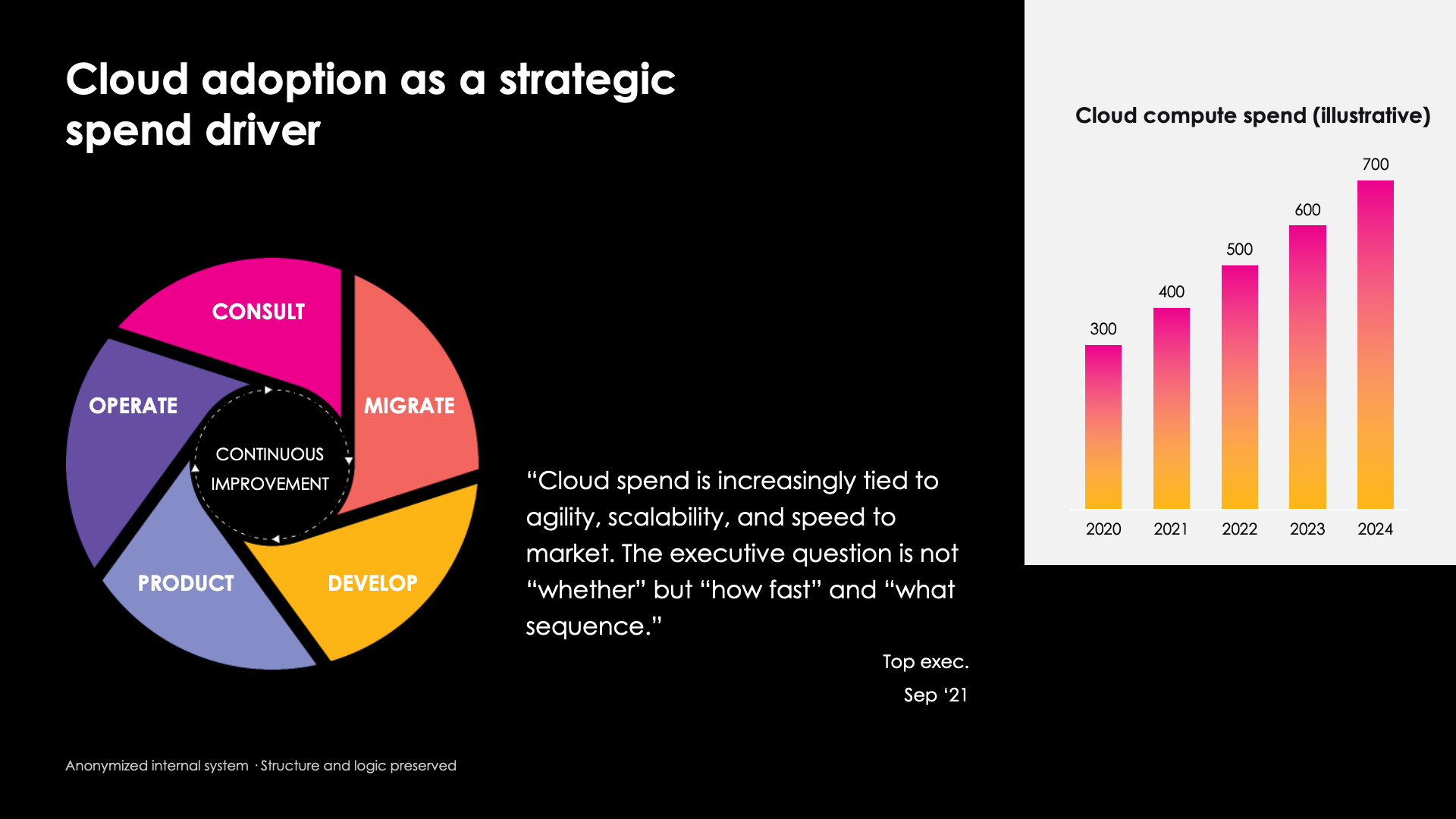
• Data visualization supported insight, not decoration
• High-stakes presentations maintained hierarchy under pressure
• Narrative logic scaled from board decks to long-form documentation
• Data visualization supported insight, not decoration
• High-stakes presentations maintained hierarchy under pressure
• Narrative logic scaled from board decks to long-form documentation
The Approach
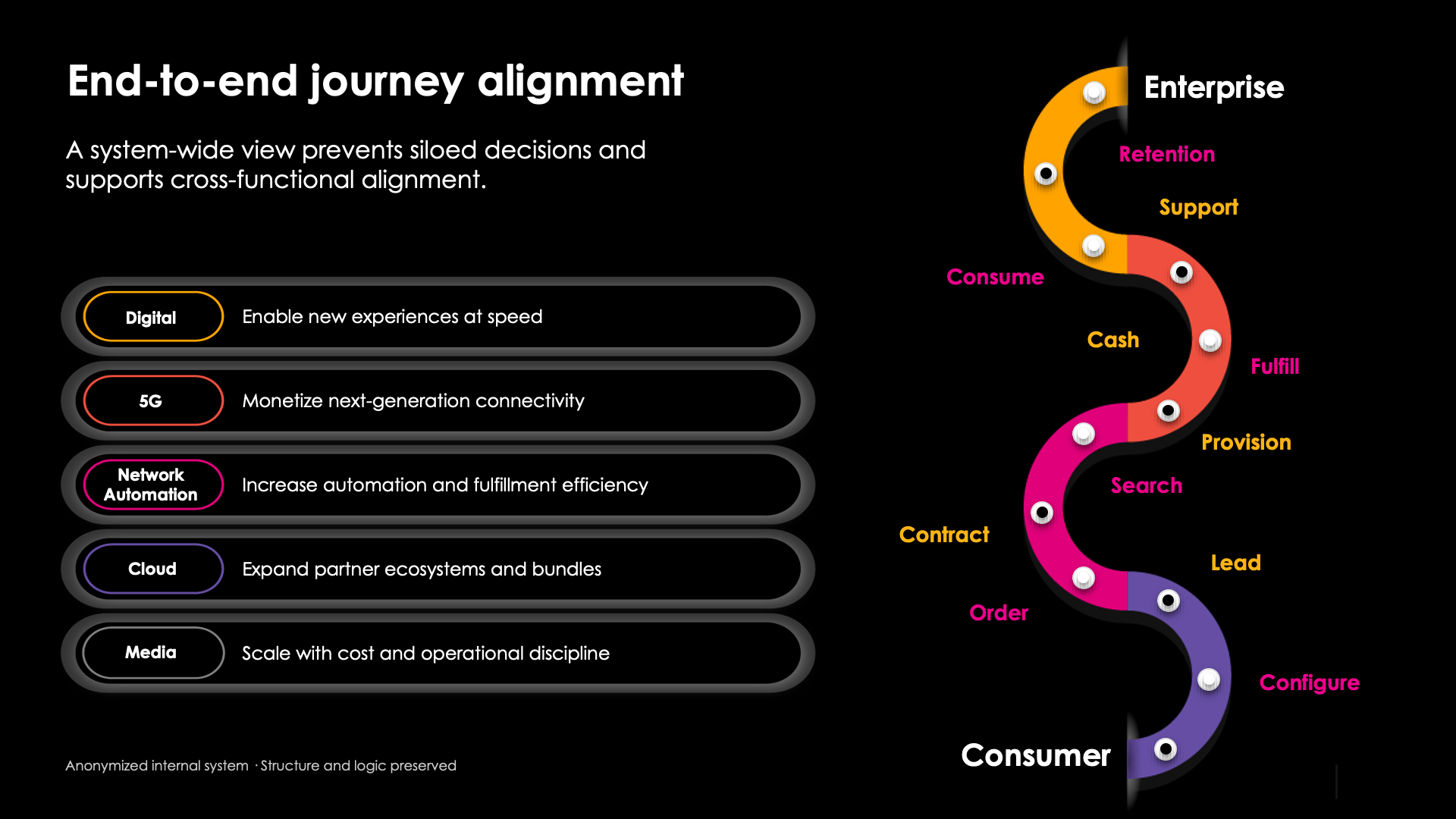
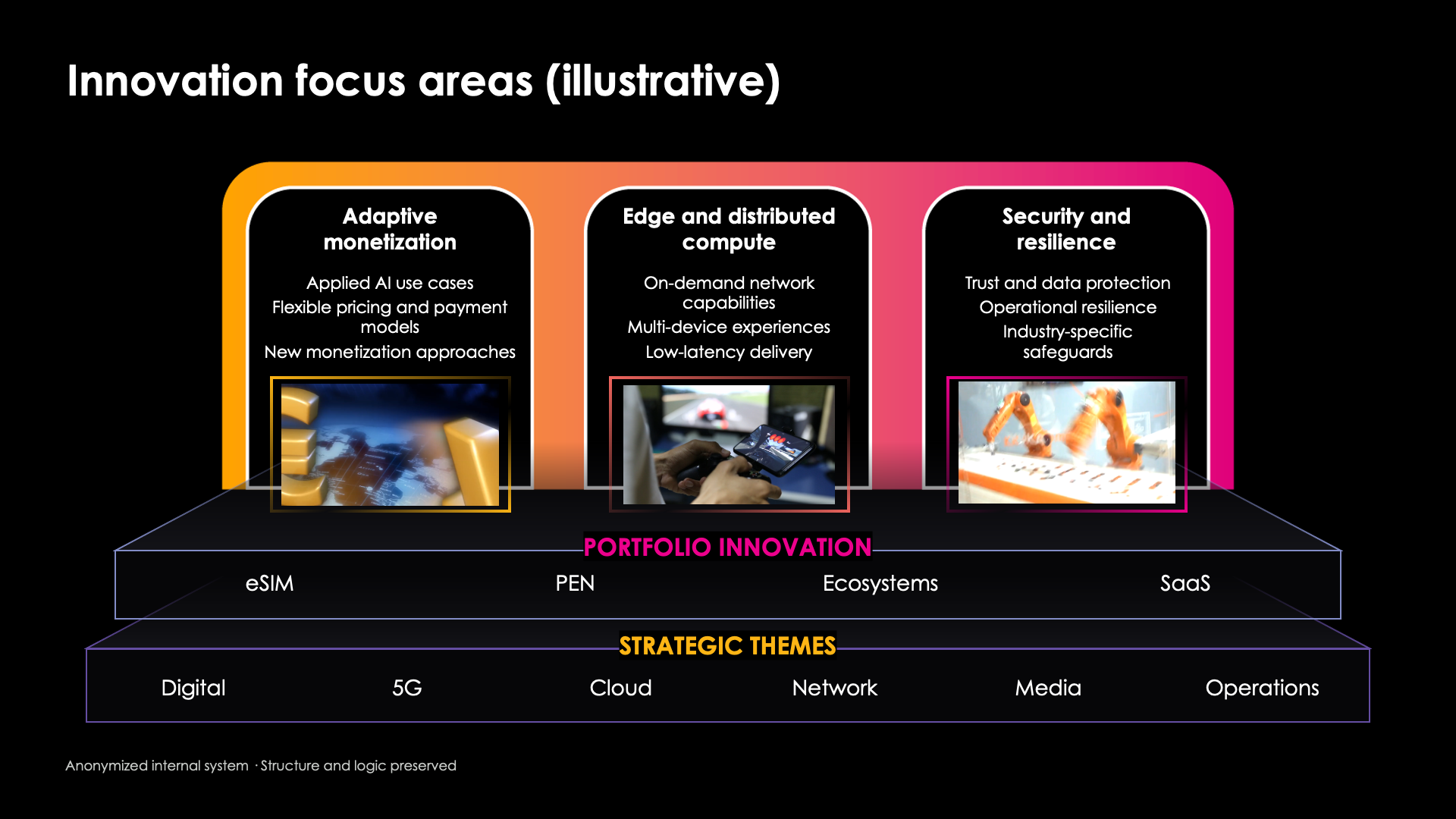
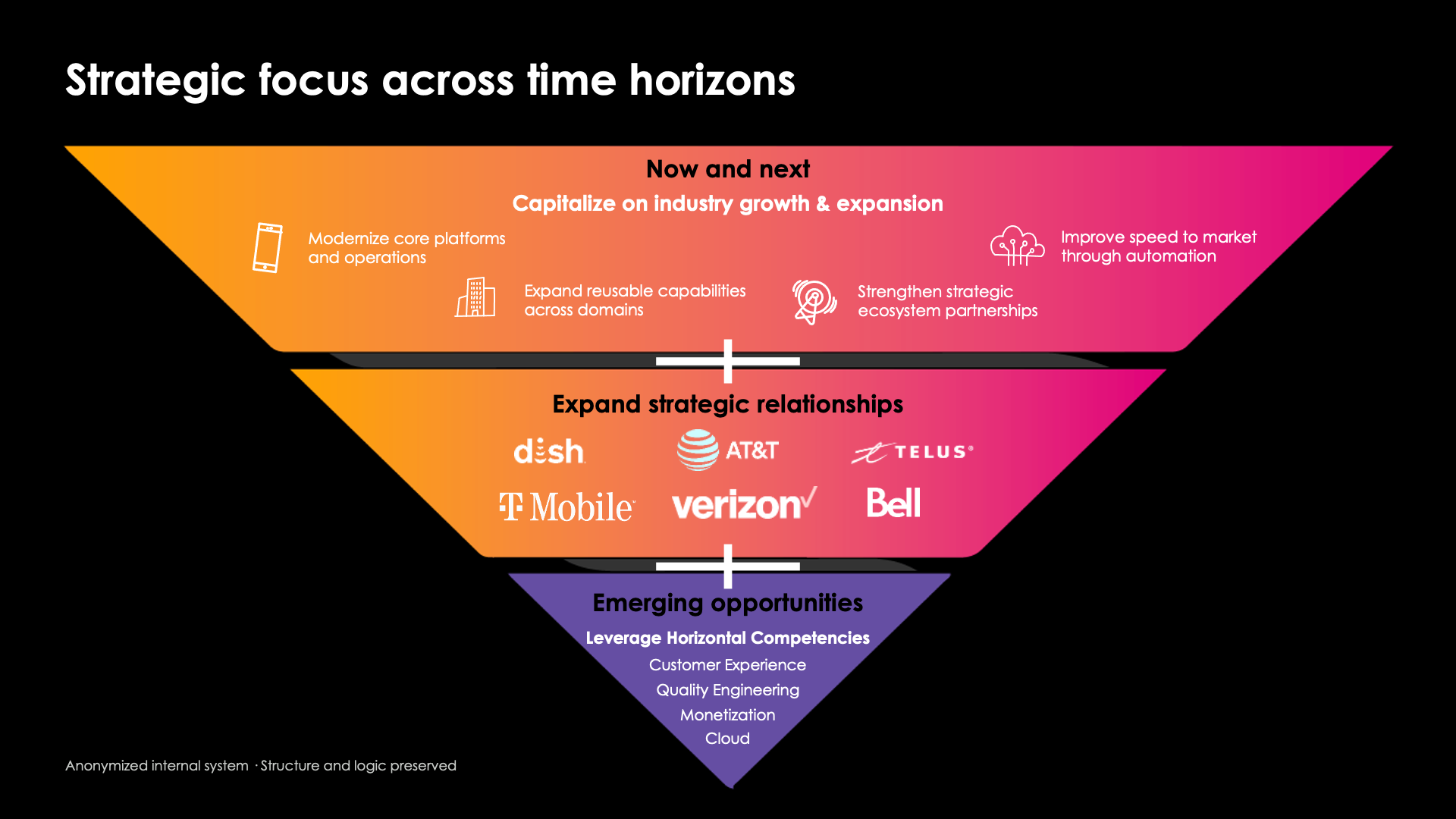
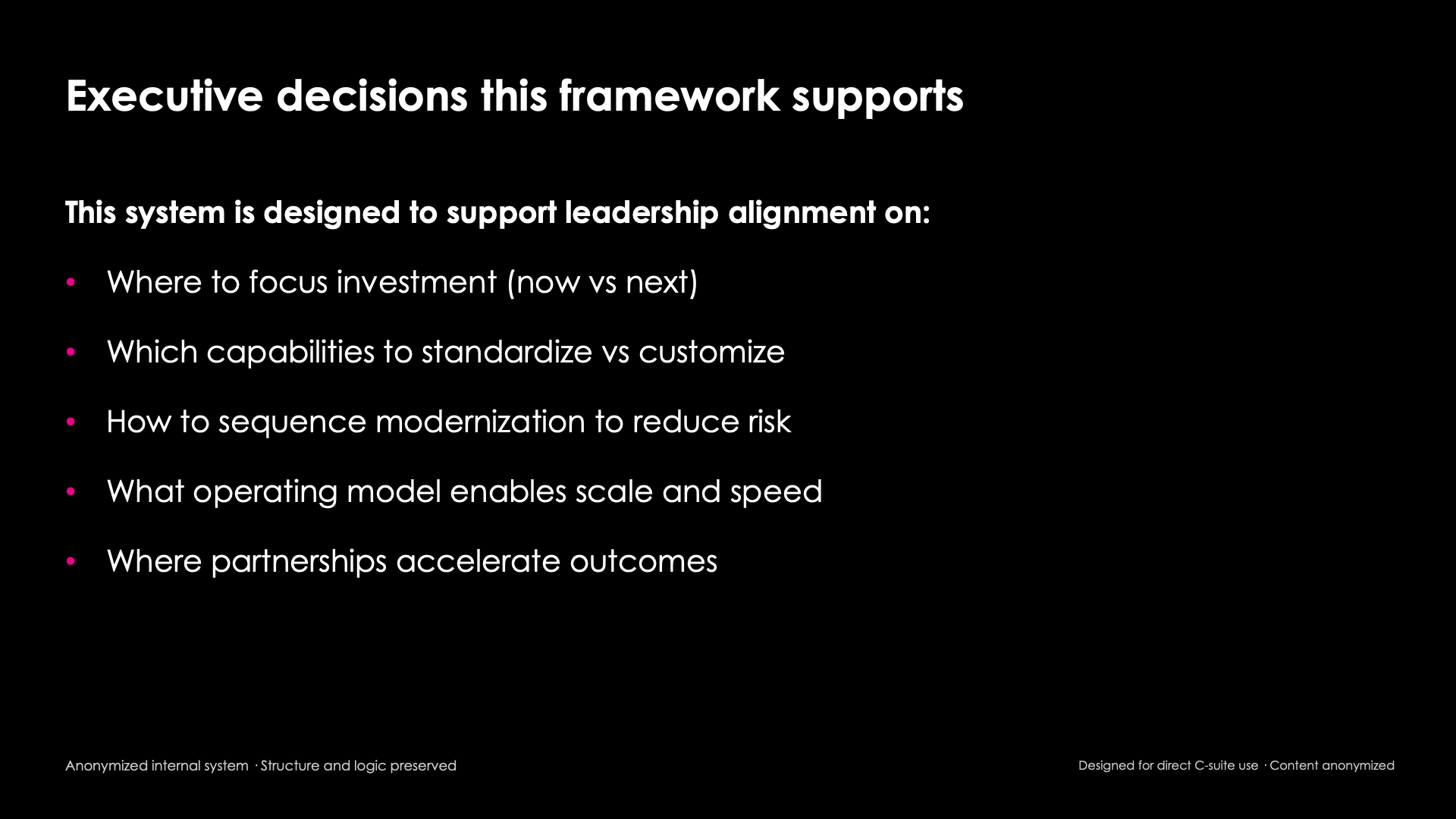
Presentations were treated not as one-off deliverables, but as components within a scalable executive communication system.
Key principles included:
• Strong hierarchy to guide executive attention
• Visual restraint to maintain credibility
• Consistent structures for data-heavy content
• Modular layouts that could scale across topics and audiences
The goal was to enable decision-making, not decoration.

Extending the Narrative System
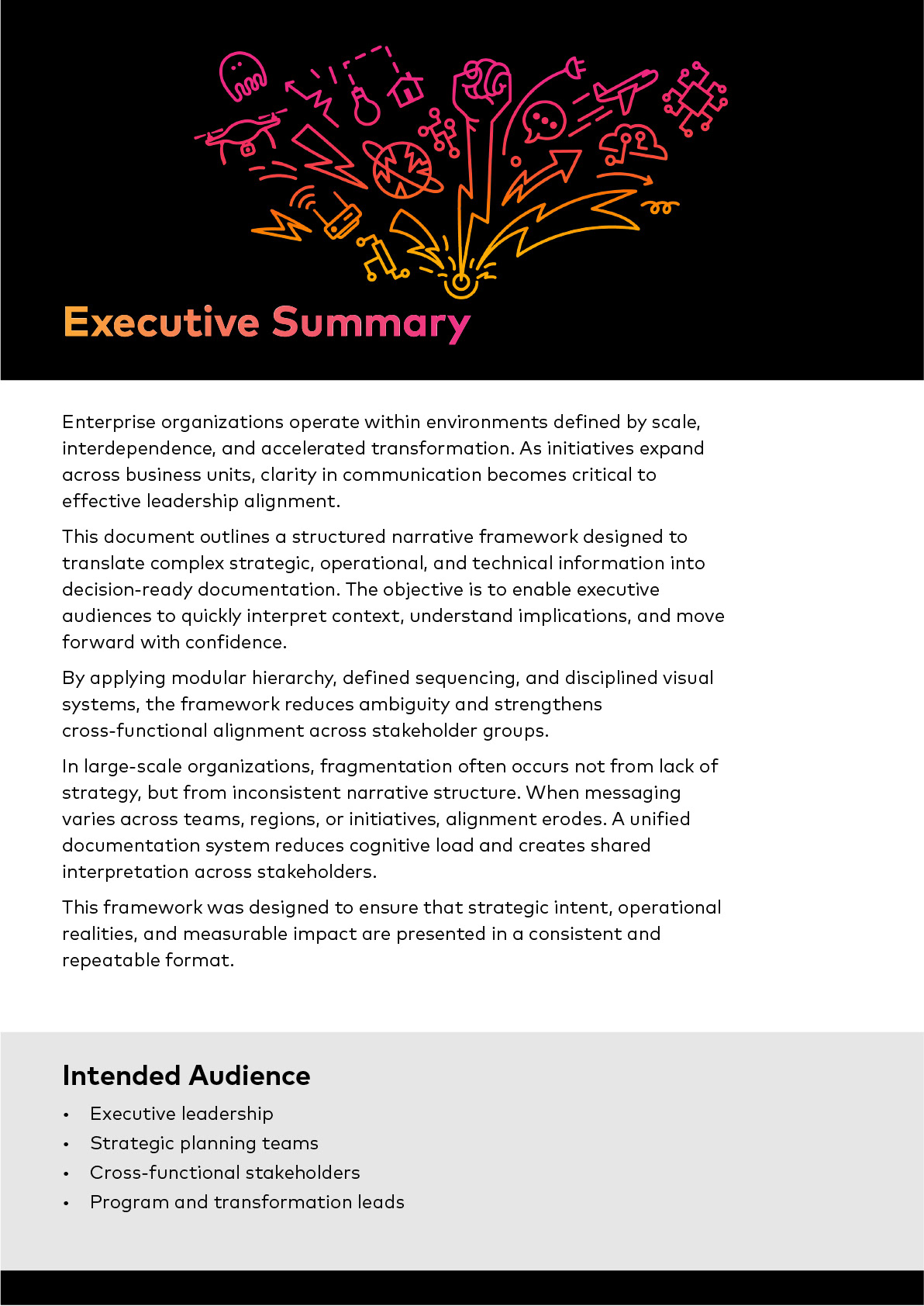
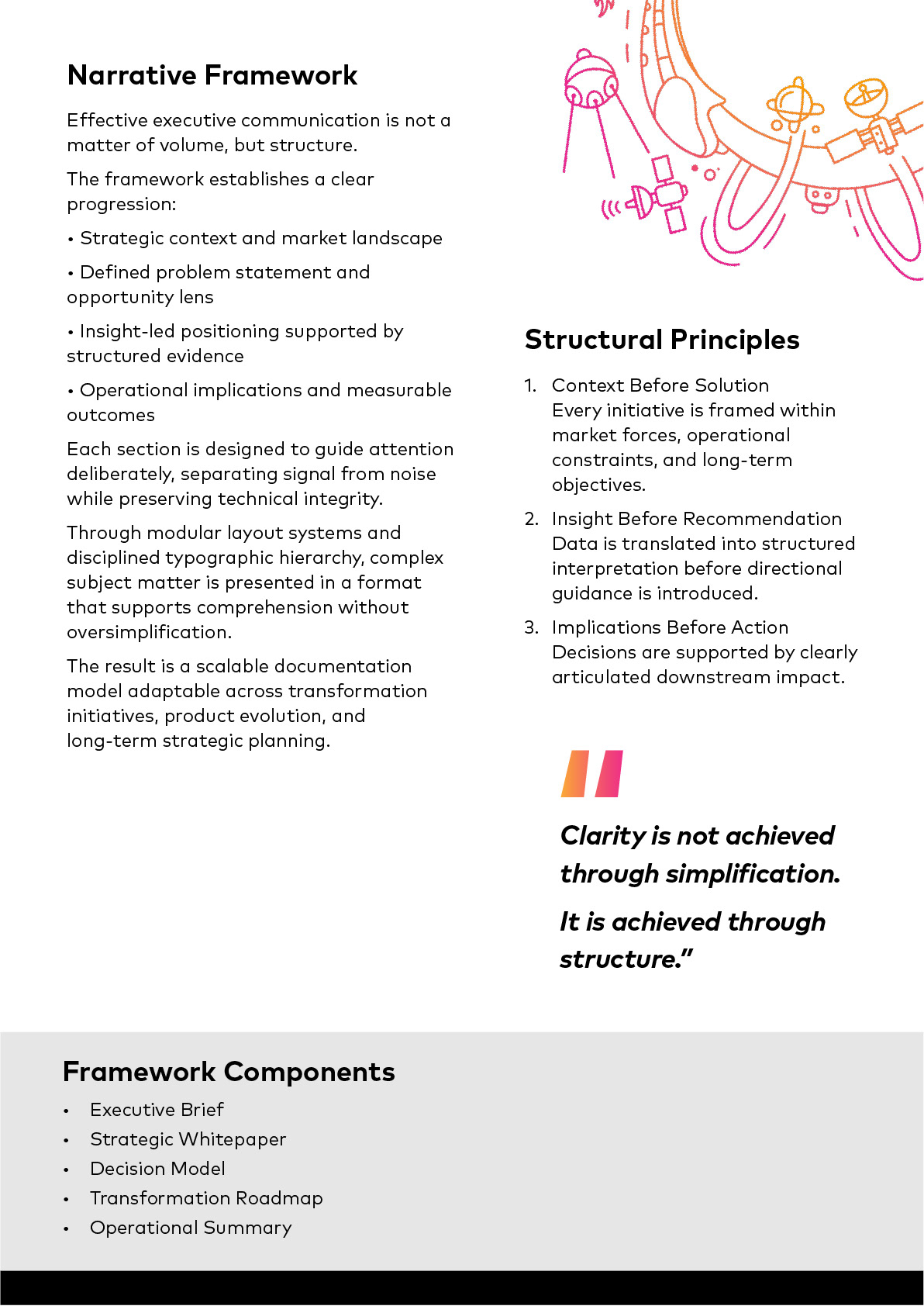
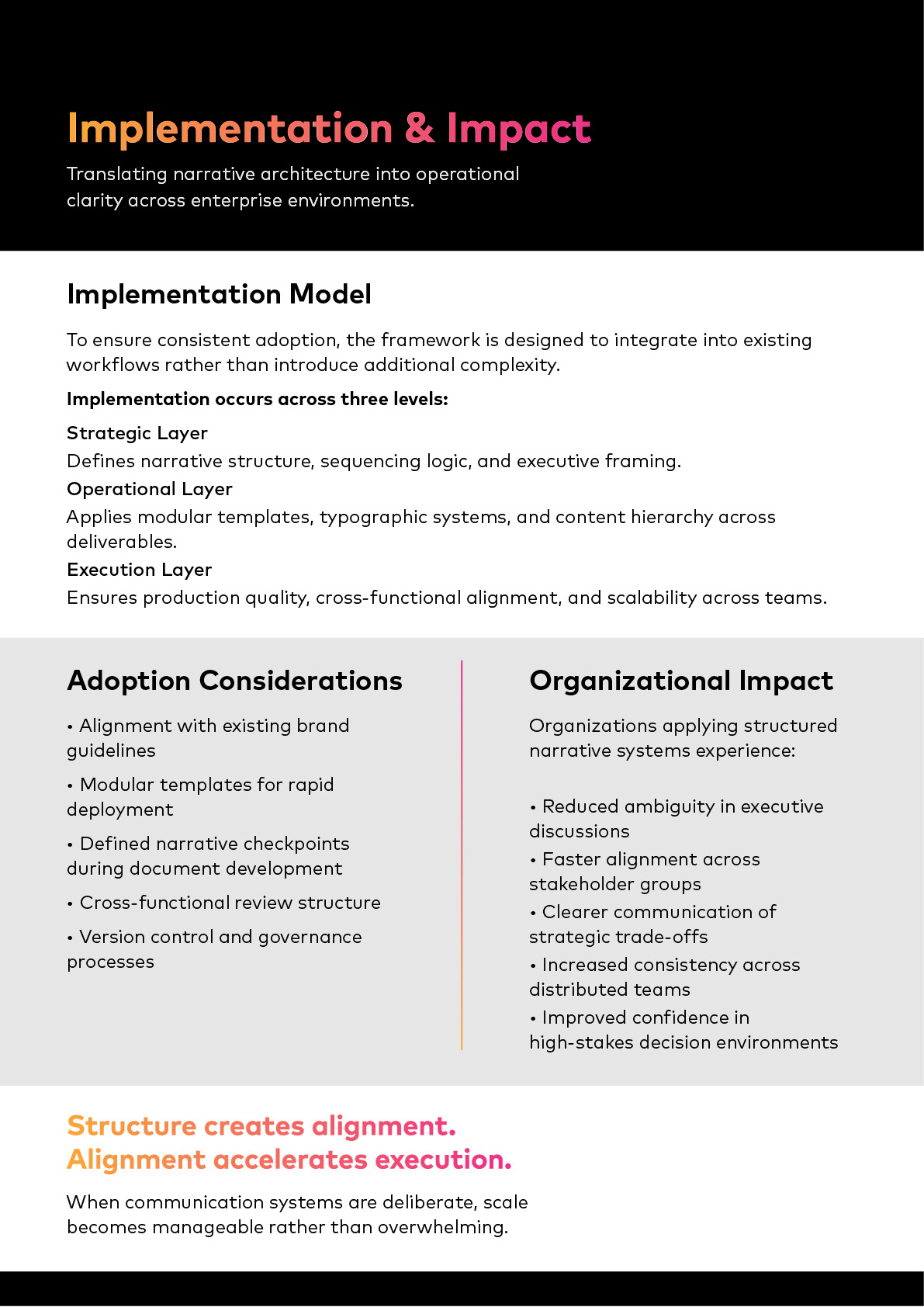
The executive narrative framework was extended into long-form strategic documentation, including executive whitepapers and structured case studies.
The same principles of sequencing, hierarchy, and modular logic were translated into document templates designed for clarity at scale.


Long-Form Narrative Structure
Long-form documentation required the same rigour as executive presentations, but with extended narrative depth and modular structure.
Each document followed a defined executive logic:
• Executive summary framing the strategic question
• Context and market landscape analysis
• Insight-led positioning supported by structured evidence
• Clear articulation of impact and next steps
• Context and market landscape analysis
• Insight-led positioning supported by structured evidence
• Clear articulation of impact and next steps
This ensured documentation remained aligned to leadership priorities while maintaining readability across technical and non-technical audiences.
Outcome
The narrative system created structural alignment across strategy, product, and leadership forums.
By establishing a repeatable executive logic:
• Decision cycles became more efficient
• Cross-functional conversations reduced ambiguity
• Complex initiatives were communicated consistently across audiences
• Decision cycles became more efficient
• Cross-functional conversations reduced ambiguity
• Complex initiatives were communicated consistently across audiences
The framework became a scalable foundation for executive communication without sacrificing depth, credibility, or speed.
Client-specific details have been generalized. Structure, logic, and presentation systems are preserved.
When decisions matter, clarity isn’t optional.